Travel health
What Happens If You Get Sick in Diani Beach? Hospitals, Clinics & Emergency Care
Clinics, hospitals, emergencies and insurance — a practical, realistic guide to getting medical care on the south coast.
By Bernd Trompell · · 9 min read
If you get sick in Diani Beach, you can usually seek assessment at a local clinic or hospital in the Diani–Ukunda area, and more serious cases may be referred to a larger hospital in Mombasa. For a medical emergency, get professional help immediately and contact your travel insurer’s assistance line as early as possible. What any facility can offer on a particular day depends on its staff, equipment and capacity, so confirm services directly rather than assuming them.
This guide is about access to care: what kinds of facilities exist, how to choose one, what to have ready and how insurance fits in. It is general travel information written by an accommodation business, not individual medical advice, and it does not diagnose illness or recommend specific treatment.
The Short Answer
Diani has local healthcare, including Diani Beach Hospital, which lists outpatient, inpatient, laboratory, imaging and intensive-care services on its official website. Mombasa, further north, has larger hospitals that may be used for more specialised care. Before travelling, buy insurance with medical and evacuation cover, save your insurer’s 24-hour assistance number and bring your own medicines. In an emergency, seek help immediately.
What happens if you get sick in Diani Beach?
For a non-urgent problem, the usual path is to contact or visit a local clinic or hospital, explain your symptoms and be assessed. The clinician may treat you as an outpatient, run tests, admit you or refer you elsewhere. Call your travel insurer’s assistance service early: many policies ask to be told before significant treatment, and they may be able to suggest providers or arrange payment.
For a serious or life-threatening situation, do not wait to plan the perfect route. Get professional help immediately. The UK government’s Kenya travel advice on getting help lists 999 for emergency services. Ambulance availability and response times are not guaranteed, so ask your accommodation host, a local contact or your insurer how help can best be reached where you are.
Are there hospitals and clinics in Diani Beach?
Yes. It helps to understand the difference between types of facility. A clinic or medical centre typically offers outpatient consultations, simple procedures and possibly basic tests; patients go home the same day. A hospital can admit patients and usually has more extensive diagnostics. Higher-level hospitals add services such as intensive care, specialist surgery and complex imaging.
Diani Beach Hospital is the best-known local hospital. Its official website, checked 17 November 2026, lists outpatient and inpatient care, a pharmacy, laboratory, X-ray, ultrasound, CT and MRI, an intensive care unit and high-dependency unit, maternity, dental care and a range of specialities. A listed service is not a promise that it is available at every hour; for anything specific, confirm directly using the contacts on its official contact page.
Smaller private clinics and pharmacies also operate around Diani and Ukunda. Names, hours and services change, so this guide does not list them. Ask your accommodation host, your insurer or a reliable local contact for a current recommendation.
Where can tourists get medical treatment?
Visitors generally use private facilities, which often expect payment or an insurer’s guarantee of payment. When choosing, consider how urgent the problem is, what services you may need and whether your insurer has a preferred provider. For something minor, a clinic may be enough; if you are unsure, a hospital is the safer place to be assessed.
Have ready: your passport or a copy, your insurance policy number and 24-hour assistance number, a list of your medicines and allergies, any relevant medical history, and a payment card. Note when symptoms started and where you have travelled, including any safari or time outside the coast. Ask for written records and receipts — insurers usually need them.
What about serious medical emergencies?
A local hospital may stabilise a patient and then decide that a transfer is needed, for example to a facility with a particular specialist, a different level of intensive care or a specific procedure. That may mean a larger hospital in Mombasa or Nairobi, and in some cases medical evacuation abroad. Clinicians and your insurer make those decisions together; they cannot be planned in advance by the traveller.
This guide gives no response times, transfer times or cost estimates, because they depend on circumstances that cannot be predicted. What you can control is preparation: adequate insurance, a saved assistance number and accurate medical information. If someone is seriously unwell, call for professional help and contact the insurer at once.
Medical care in Diani Beach versus Mombasa
Mombasa is the coast’s main city and has several large hospitals. The Mombasa Hospital, for example, lists accidents and emergencies, intensive and high-dependency care, operating theatres, haemodialysis, imaging and many specialist clinics on its official website. Larger city hospitals generally have more specialists available.
In practice, Diani offers closer access for everyday problems and first assessment, while Mombasa may be used for more specialised treatment. Reaching Mombasa from the south coast involves a road journey and crossing the Likoni channel or using the bypass route, so travel time varies. Clinicians will advise whether a transfer is appropriate.
What if you develop a fever?
Kenya’s coast is a malaria-risk area, so a fever during your trip, or in the weeks and months after returning home, needs prompt medical assessment — even if you took antimalarial tablets. Malaria can become serious quickly, and it can only be confirmed or ruled out with a test. Tell the clinician you have been on the Kenyan coast.
Read our guide on malaria tablets for Diani Beach for prevention, or the German guide Malaria in Diani Beach if you prefer to read in German. Do not self-diagnose or wait for a fever to pass on its own.
Common travel-health concerns
Most health problems on a beach holiday are minor, but it helps to know when to seek care. Stomach upsets are common for travellers; get medical help if symptoms are severe, include blood, are accompanied by fever or do not settle. Heat and activity can cause dehydration, which affects children and older travellers faster.
Coral cuts, sea-urchin injuries, sprains and small wounds can become infected in warm conditions; have anything deep, dirty or worsening checked. Mosquito and other insect bites should be prevented where possible. Sunburn and heat illness are easier to avoid than treat. Our guide to dangerous animals in Diani Beach covers marine stings, monkeys and other wildlife encounters, and Is Diani Beach Safe? covers wider safety.
Pharmacies and prescription medication
There are pharmacies in Diani and Ukunda, and Diani Beach Hospital lists one among its services. However, do not assume that a specific brand, strength or speciality medicine will be in stock. Bring enough of your regular medicines for the whole trip plus a few extra days, in original packaging, with a copy of the prescription and a note of the generic names.
Keep essential medicines in your hand luggage. If you need controlled medication, check entry rules before travel. Ask a doctor or pharmacist at home about suitable travel supplies; this guide does not recommend particular medicines.
Travel insurance and medical expenses
Medical treatment and evacuation can be very expensive, and private facilities may ask for payment or a guarantee before treatment. Kenya requires visitors to hold travel health insurance as part of the entry process, according to current UK and German government advice; check the latest requirements on the official eTA portal before departure.
Read your policy for: medical-expense limits, emergency evacuation and repatriation, whether pre-existing conditions are declared and covered, any excess, and whether activities such as diving or safaris are included. Note how claims and direct payment work, and save the 24-hour assistance number in your phone and on paper. Contact the insurer before major treatment unless it is a genuine emergency.
Travelling with children or older family members
For children, pack familiar medicines in suitable forms, bring a thermometer and know their weight for dosing questions. Babies and young children can become dehydrated and unwell quickly, so seek care early rather than waiting. Confirm with your doctor what vaccines and malaria prevention are suitable for their age.
For older travellers or anyone with a long-term condition, discuss the trip with a doctor before booking, carry a summary of diagnoses, medicines and allergies, and make sure the condition is declared to the insurer. If you rely on a specific service such as dialysis, arrange it in advance directly with the provider rather than assuming availability.
What should you prepare before arriving?
A little preparation makes any medical situation easier to handle. Use this checklist before you travel, and share key details with someone in your group.
| Type of care | Typically suited to | Keep in mind |
|---|---|---|
| Clinic or medical centre | Minor illness, small injuries, first assessment | Usually outpatient only; services and hours vary |
| Local hospital (e.g. Diani Beach Hospital) | Assessment, tests, admission, many urgent problems | Confirm specific services directly |
| Larger hospital (e.g. Mombasa) | More specialised or complex care after referral | Requires a road journey; clinicians advise on transfer |
- Travel insurance with medical, evacuation and repatriation cover; policy number saved.
- Insurer’s 24-hour assistance number in your phone and on paper.
- Enough regular medicine for the trip plus extra days, in original packaging.
- Copies of prescriptions with generic medicine names.
- A short summary of conditions, allergies and blood group if known.
- Malaria prevention discussed with a travel-health professional.
- Emergency contacts at home and your embassy’s details.
- Passport copy and a payment card with available credit.
Staying at Zavani
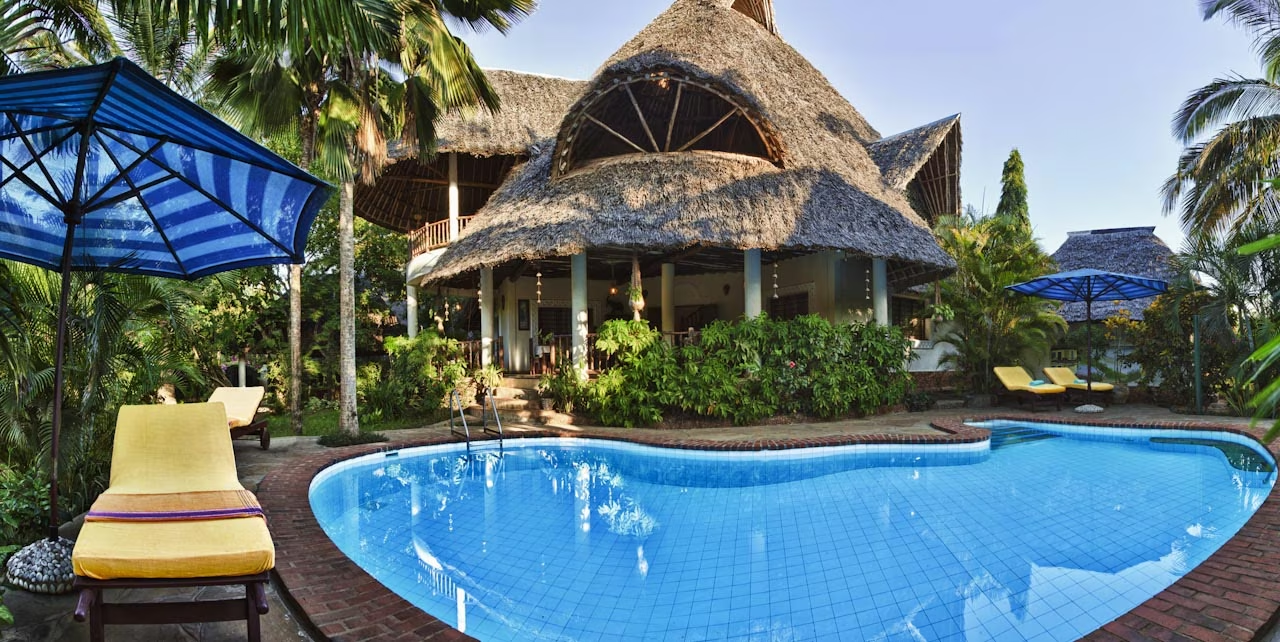
Zavani is a private villa about 300 metres from Diani Beach, with six bedrooms across two three-bedroom units for up to 12 guests. Chef services and daily housekeeping are included; groceries are charged separately. Zavani is accommodation, not a medical provider: plan your own insurance, medicines and emergency contacts before you arrive.
Frequently Asked Questions
Is there a hospital in Diani Beach?
Yes. Diani Beach Hospital lists outpatient, inpatient, imaging, laboratory and intensive-care services on its official website. Confirm specific services directly, as availability can vary.
What is the difference between a clinic and a hospital?
Clinics usually provide outpatient consultations and simple care. Hospitals can admit patients and usually have wider diagnostics; higher-level hospitals add intensive and specialist care.
What number do I call in an emergency in Kenya?
UK government advice lists 999 for emergency services. Response times and ambulance availability are not guaranteed, so also contact your insurer’s assistance line and a local contact.
Will I need to go to Mombasa for treatment?
Not necessarily. Many problems can be handled locally. For some specialised care, clinicians may recommend transfer to a larger hospital in Mombasa or elsewhere.
Are there pharmacies in Diani Beach?
Yes, but specific medicines may not always be available. Bring enough of your regular medicines and prescription copies.
Do I need travel insurance for Kenya?
Current UK and German government advice says travel health insurance is required in the entry process. Check the latest official requirements and make sure your policy includes medical evacuation.
What should I do if I get a fever after my trip?
Seek medical assessment promptly and say you have been in a malaria-risk area, even if you took tablets. Only a test can confirm or rule out malaria.
Does my insurer arrange medical evacuation?
Many policies include it, but it depends on your cover. Check the limits and conditions, and contact the assistance service as early as possible.
Sources and Health References
- Diani Beach Hospital: official website and services
- Diani Beach Hospital: official contacts
- The Mombasa Hospital: facilities and services
- GOV.UK: Kenya travel advice — getting help
- GOV.UK: Kenya travel advice — health
- CDC: Kenya traveller health information
- Kenya eTA official portal
Facility information last verified 17 November 2026 from official websites. Services, staffing and availability can change; confirm directly. This is general travel information, not individual medical advice, and it has not been medically reviewed. In an emergency, seek professional help immediately.
More stories from the coast