Ocean & beach planning
Can You Swim in Diani Beach? Tides, Seaweed & Ocean Safety
How tides, seaweed, wind and waves shape a beach day — and the checks to make before an ocean swim.
By Bernd Trompell · · 12 min read
Yes, you can swim in Diani Beach when conditions are suitable, but it is not a beach where every tide, weather pattern or stretch of water is equally appropriate. Water depth, currents, waves and local hazards change. Check daily tide predictions, seek current advice for the particular area and be prepared to stay ashore when conditions are uncertain.
That distinction matters more than a photograph of turquoise water. A satisfying beach holiday can include swimming, shoreline walks and afternoons away from the ocean. This guide explains how to make those choices without treating the reef, warm water or a sunny morning as a safety guarantee.
The Short Answer
Choose conditions, not a fixed swimming time: check the tide, wind, waves, entry and exit, local warnings and your swimming ability before each visit. Neither high tide nor low tide is automatically safe, and lifeguard coverage must be verified rather than assumed.
Understanding Diani Beach tides
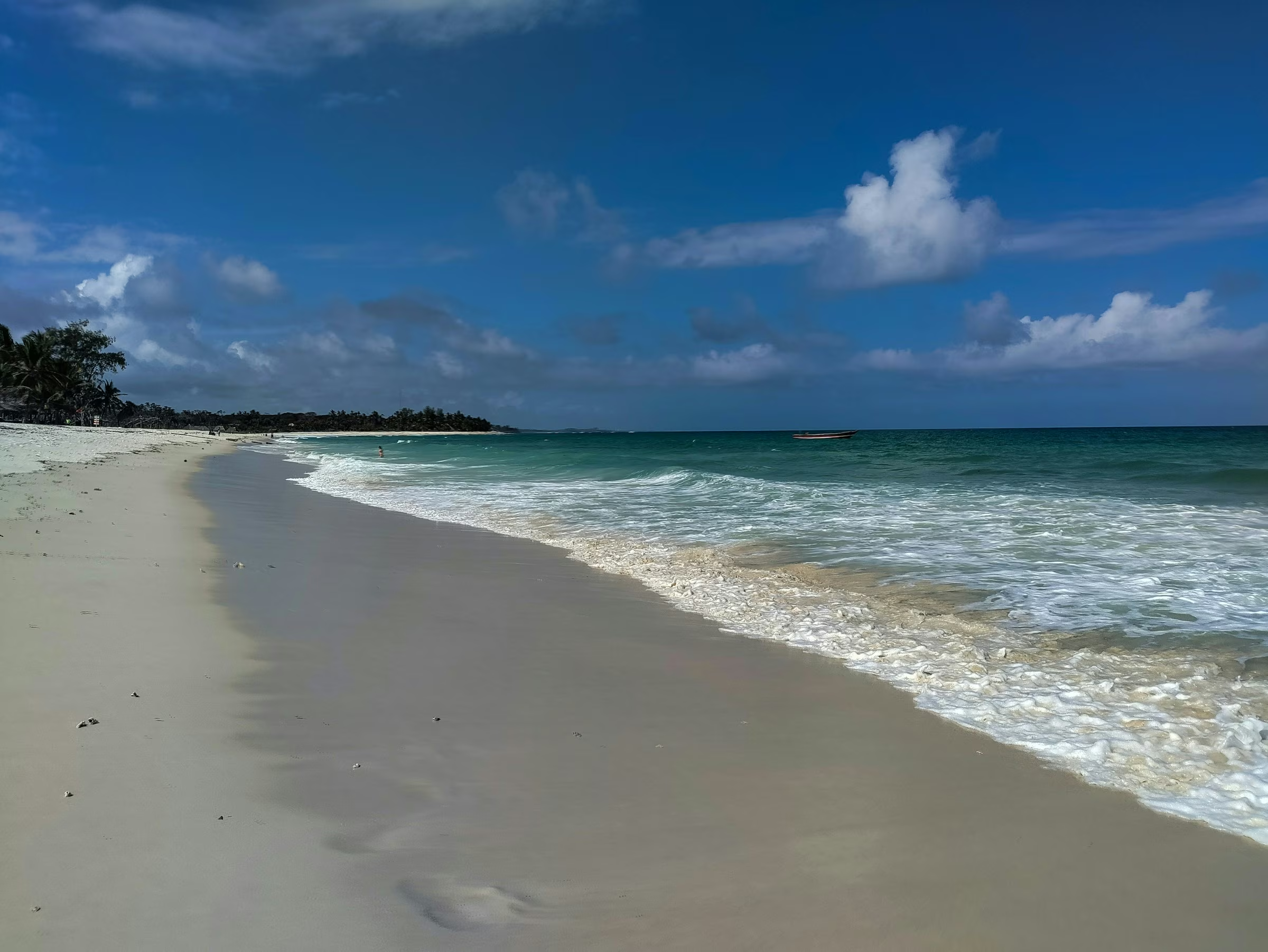
High tide means the sea is near its higher predicted level; low tide means it is near its lower level. On a gently shelving shoreline, this changes how far you walk before reaching deeper water. Lower water can expose rock, reef and marine vegetation; higher water can cover features that were visible earlier. The exposed route out is not necessarily an available route back.
Tide times and heights change through the month. Spring tides have a larger difference between high and low water; neap tides have a smaller difference. ‘Spring’ here is a tidal term, not a season. Do not transfer yesterday’s times to today or assume the same water depth at the same clock time. The RNLI’s tide guidance explains tidal cut-off and why checking both predictions and your surroundings matters.
The table below describes possibilities, not an instruction to swim at a particular tide. Moving water between predicted high and low tide also matters. A tide table alone cannot tell you the current at a reef opening or establish whether your chosen swimming area is suitable.
| Consideration | High tide | Low tide |
|---|---|---|
| Water depth | More water may be accessible nearer shore; depth still varies. | Longer shallow stretches may make swimming impractical. |
| Ground underfoot | Rocks and other obstacles may be covered. | Rock, reef and vegetation may be exposed. |
| Beach access | Less exposed sand; some routes can be cut off. | More ground may be visible, but the return can change. |
| Swimming decision | Not automatically safe: check waves, currents and ability. | Not automatically safe: do not chase deeper water offshore. |
When is the best time to swim?
There is no universally best clock time for Diani Beach swimming. A convenient morning swim one day might coincide with shallow water or unsuitable wind another day. Higher water may make swimming accessible nearer shore, but it can also hide obstacles or bring waves further up the beach. Low tide may suit a shoreline walk better than a swim.
Before entering, watch the water for a while and ask about the exact stretch you intend to use. Identify a straightforward entry and exit, check for boats and moving water, and consider whether everyone can manage the depth and waves. Other swimmers are not proof of safety. If you cannot assess the conditions confidently, do not enter simply because it is your scheduled beach hour.
Seaweed: a changing shoreline, not a fixed season
What visitors call seaweed can include marine algae and loose seagrass leaves. Seagrasses are flowering plants, not algae, and their underwater meadows support marine ecosystems. The NOAA seagrass explanation describes that distinction. Natural vegetation is not automatically litter or a sign that a beach has been neglected.
Winds, waves and currents can move floating material onto a beach. Seasonal weather influences those processes, but this guide does not establish a reliable Diani month-by-month seaweed calendar. Amounts can differ between visits and sections of coast. Neither a spotless publicity photo nor one seaweed-covered holiday photo predicts your stay. Ask for recent observations rather than a promise of a permanently clear beach.
A few strands do not by themselves prove water is unsafe. Dense vegetation can make the bottom harder to see or feel, conceal sharp material and make walking awkward. Avoid thick accumulations, visible rubbish, discoloured runoff or water that you cannot assess. Seaweed presence is one observation; it does not replace checks for currents, weather or water quality.
Currents and waves: calm-looking water can mislead
Warm, clear water is still moving water. Wind, waves, tides and the shape of the seabed affect how it flows. A reef is not a continuous safety barrier, and unfamiliar openings or deeper channels are not places to explore by swimming out from shore. Do not assume that a gap in breaking waves is a safe passage.
Rip currents can carry swimmers away from shallow water and can be difficult to identify. The RNLI’s rip-current guidance advises against swimming directly against the current. Float to conserve energy, raise a hand and shout for help; if able, move parallel to shore until free, then return. This is general guidance, not evidence that any particular Diani location has been surveyed.
Swim within your ability and with a companion. Avoid alcohol before entering. Stay away from boat routes and do not make an offshore reef swim your first test of open-water ability. If someone is struggling, alert available trained help and call for emergency assistance rather than entering an unfamiliar current yourself.
Sea urchins, jellyfish and sharp surfaces
In tropical shallows, consider foot injuries from sea urchin spines, sharp coral, rocks or debris, and possible stings from jellyfish. These are hazards to be aware of, not a claim that they are present on every visit. This guide provides no local sighting frequency or seasonal jellyfish forecast. Look where you place your feet and never handle unfamiliar marine animals, including those washed ashore.
Well-fitting water shoes can help protect feet when walking on uneven ground, but do not make reef walking harmless or prevent every puncture. Avoid standing on coral and do not step blindly into vegetation or pools. Choose an alternative route if the bottom is difficult to see.
Seek local medical advice after a sting or puncture, particularly in a tropical country. Do not handle tentacles or spines with bare hands. Breathing difficulty, loss of consciousness or a severe reaction needs urgent medical help. The NHS marine-sting guidance is a general reference; its UK species examples and emergency arrangements are not Diani-specific.
Swimming with children
Children may swim when conditions suit their abilities and close supervision is possible. Nominate a responsible adult who is actively watching, not taking photographs or assuming another adult has the task. Keep young children and weak swimmers within arm’s reach. Shallow water is not a substitute for supervision: waves, uneven footing and a rising tide can change the situation quickly.
Pool confidence does not establish ocean confidence. Start conservatively and leave if a child is tired, frightened or struggling to stay upright. Inflatable toys can drift and are not safety equipment. The CDC’s drowning-prevention guidance recommends properly fitted life jackets for children around natural water, alongside close supervision. Footwear, sun protection and breaks can help with comfort, but none replaces a suitable swimming decision. Our Diani Beach with kids guide covers the wider family holiday.
Beach safety and local advice
Ask accommodation staff or an established local marine operator about current conditions and who can provide reliable advice at your chosen access point. Specifically ask about supervision, hazards, boat movements and the way back. Prefer a genuinely supervised swimming area when available, but this article does not verify lifeguard coverage anywhere along Diani.
Follow posted warnings and local restrictions. If advice is unclear or conflicting, staying out is a valid decision. Carry a charged phone, know your location and discuss how to get assistance before an emergency. For personal security and broader travel precautions, read Is Diani Beach Safe?; ocean conditions are a separate, daily assessment.
Rain, wind and thunderstorms
Rain alone is not the only question. Wind can increase chop, waves can change your entry and exit, and poor visibility makes it harder to monitor swimmers. Stay out during thunderstorms, strong winds, rough seas or official warnings. Avoid swimming in water affected by flooding or visible runoff. A sunny interval after rain is not a water-quality test.
Conditions may change while you are on the beach. Reassess when the wind strengthens, the tide advances or waves become more difficult. Leave early rather than waiting until returning is a struggle. No fixed waiting period after heavy rain is supplied here because local water quality has not been established.
Best months: climate context, not swimming guarantees
January and February are reasonable starting points for travellers seeking comparatively dry, hot beach weather. March–May is Kenya’s broad long-rains window, with April and May prominent in the historical Mombasa rainfall record. Coastal rain can continue into June. July–September generally brings less intense heat, but wind and showers can still affect ocean plans. October–December spans the broad short-rains window, with variable onset and intensity.
These are regional climate patterns, not a ranking of safe swimming months. Historical air-temperature and rainfall averages cannot predict wave height or currents for your dates. The Best Time to Visit Diani Beach guide covers seasonal planning; use current marine information to decide whether to enter the water on any particular day.
How to check tides and ocean conditions
Start with the Kenya Meteorological Department’s daily marine forecast. Its near-shore bulletins cover Kwale, the county containing Diani, alongside other coastal counties. Check the issue date, validity period and the Kwale section; look for wind, waves, sea state, warnings and any tide predictions provided. An old bulletin in search results is not today’s forecast.
For another tide source, confirm the named location or reference station, date and time zone, and ask locally how applicable it is to your beach. Predictions describe expected water levels, not a beach inspection or a guarantee of safe swimming. County-level forecasts also cannot resolve every small channel, seabed hazard or local access point. Combine them with on-the-day guidance and your own limits.
Plan a beach day around changing conditions
Keep the swim movable. Check forecasts before leaving, assess the beach on arrival and agree an alternative before anyone is disappointed. Suitable conditions might mean a short swim; a shallow or rough period might mean a walk on accessible sand, lunch or time away from the shore. Check the return route before walking further at low tide.
For couples, that flexibility preserves an unhurried day. For families, it avoids turning a promised swim into pressure to enter unsuitable water. The About Diani destination guide and things to do in Diani Beach offer wider context and activities; any marine outing still needs its own conditions check.
A practical ocean-safety checklist
Use this before every swim, not just on the first day of the holiday. A negative answer is a reason to pause, ask or stay ashore.
- Check a current, correctly dated tide prediction and marine forecast.
- Follow warnings and ask about this exact beach access and swimming area.
- Confirm supervision rather than assuming a lifeguard is present.
- Identify a manageable entry, exit and return route.
- Stay away from unfamiliar channels, boat traffic and difficult surf.
- Swim with a companion, within your ability and without alcohol.
- Assign active child supervision; keep young or weak swimmers within arm’s reach.
- Check footing and avoid touching marine animals or standing on coral.
- Carry a means of calling for help and know your location.
- Reassess changing conditions and keep an alternative to swimming.
A private base near the beach
Zavani is private villa accommodation approximately 300 metres from Diani Beach, not beachfront. Six bedrooms are split across two three-bedroom units, with a maximum of 12 guests. Chef services and daily housekeeping are included; groceries are charged separately.
A private base can make it easier to keep meals and beach visits flexible. It does not provide supervised ocean swimming, lifeguards or an ocean-safety service. Explore Zavani’s accommodation when planning a stay that leaves room for both beach time and days when the sensible choice is to remain ashore.

Frequently Asked Questions
Is Diani Beach safe for swimming?
Swimming is possible in suitable conditions, but no blanket safety assurance applies. Check tides, waves, currents, weather and local advice for the exact area. Do not assume lifeguards are present.
Is the ocean warm in Diani Beach?
Diani is a tropical coast and the ocean is generally warm. This guide does not provide measured sea temperatures or current readings. Warm water does not remove the risks of currents, waves or fatigue.
Can you swim at low tide?
Sometimes, depending on depth, footing and conditions. Water may be too shallow for a comfortable swim or expose rock and vegetation. Do not walk or swim out to an unfamiliar channel to find deeper water.
Is high tide always best for swimming?
No. Higher water can make depth more accessible but can hide obstacles, reduce exposed sand and change entry and exit. Waves, currents and individual ability still matter.
Does seaweed make swimming unsafe?
A few strands do not alone establish unsafe water. Thick vegetation can obscure footing and conceal hazards. Avoid dense accumulations or visibly contaminated water and assess currents and weather separately.
Can children swim in Diani Beach?
When conditions suit their ability and close, active supervision is possible. Keep young children and weak swimmers within arm’s reach; shallow water, inflatable toys and pool confidence are not substitutes for supervision.
Are there lifeguards on Diani Beach?
This guide does not verify coverage. Ask about the exact area and time of your visit. Prefer genuinely supervised swimming when available, and do not assume a hotel or busy beach provides supervision.
Where can I check the tide?
Check the current KMD near-shore marine bulletin for Kwale and its tide information where supplied. Confirm validity, location and time zone for any other tide source, and combine predictions with local advice.
Sources and Ocean-Safety References
- CDC: child supervision and life jackets around natural water
- KMD: current daily marine near-shore forecasts, including Kwale
- RNLI: tide changes and tidal cut-off (general coastal guidance)
- RNLI: rip currents and what to do (general guidance)
- RNLI: open-water swimming precautions
- NOAA: seagrasses and their ecological role
- NHS: marine stings, including advice after tropical-country injuries
- DWD: historical Mombasa/Port Reitz climate normals, 1961–1990 (regional context)
- KMD: March–May 2026 long-rains seasonal statement (dated context)
- KMD: October–December 2026 short-rains seasonal outlook (dated context)
Information checked 10 November 2026. General RNLI and NHS guidance is not a local beach survey or lifeguard service; UK emergency arrangements and species examples do not establish Kenyan arrangements. Regional climate averages are not daily ocean forecasts. No measured local sea temperatures, seaweed calendar or current swimming-safety assessment is supplied.
More stories from the coast